Both personally and professionally, I’ve seen how easy it is for people to feel misunderstood or told what they’re experiencing doesn’t fit an easy checklist of symptoms.
As I worked within hospitals and the broader mental health system, too often, people’s experiences were reduced to “just anxiety,” or they were told everything would improve if they simply healed their trauma. Complex experiences were oversimplified, and people left feeling rejected rather than helped. Seeing that defeat in people became one of the most heartbreaking parts of the work.
I knew I wanted to create something different.
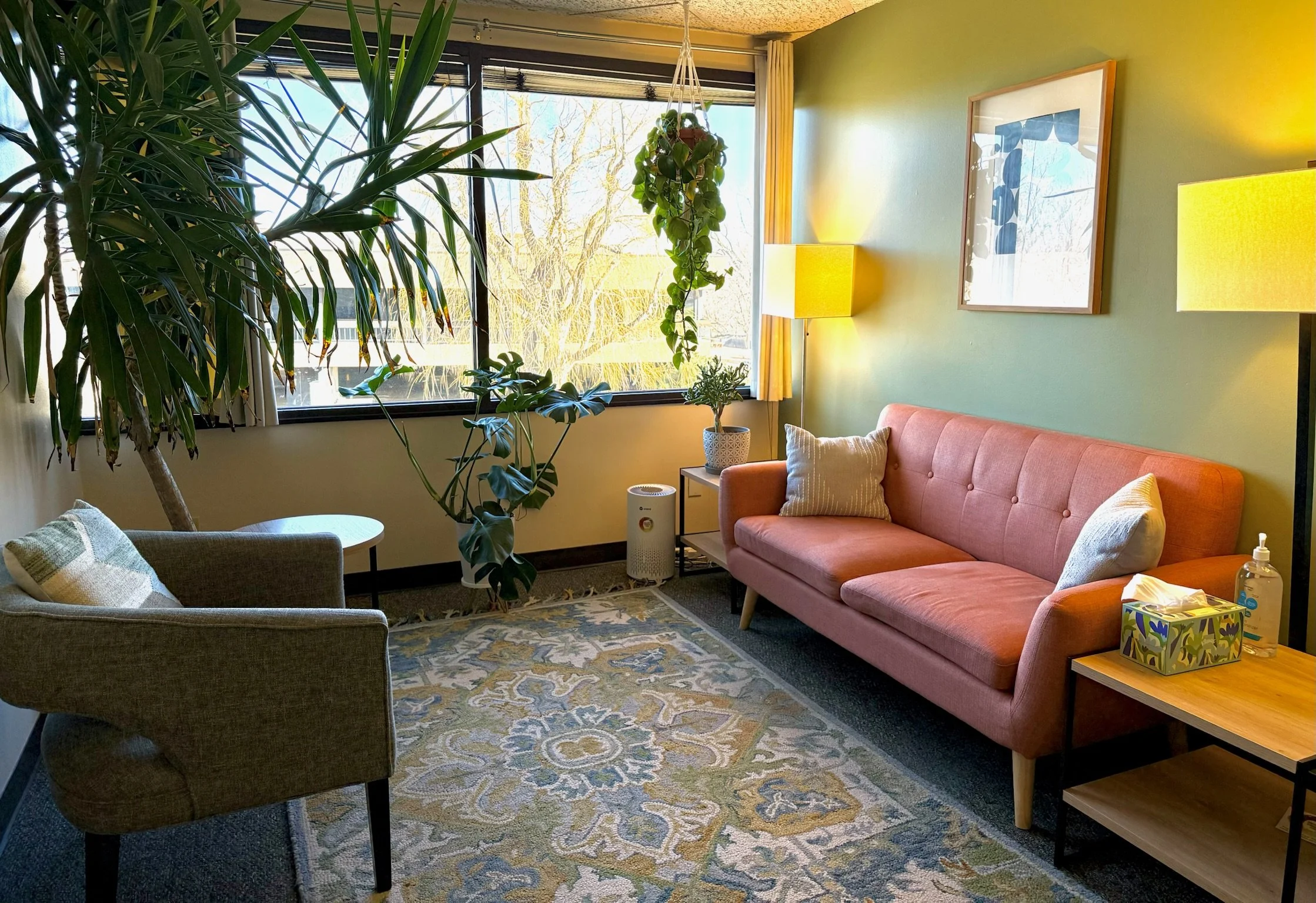
This practice was created to provide a space where people don’t have to convince someone their pain is real. Where chronic illness and trauma are understood as deeply interconnected experiences. Where curiosity replaces assumptions, where your story isn’t reduced to a diagnosis, and where there’s room for the complexity of being human.